
Uncategorized
Breaking In New Replica Sneakers: The 2026 Insider Guide to 1:1 Comfort 👟
25
May
May
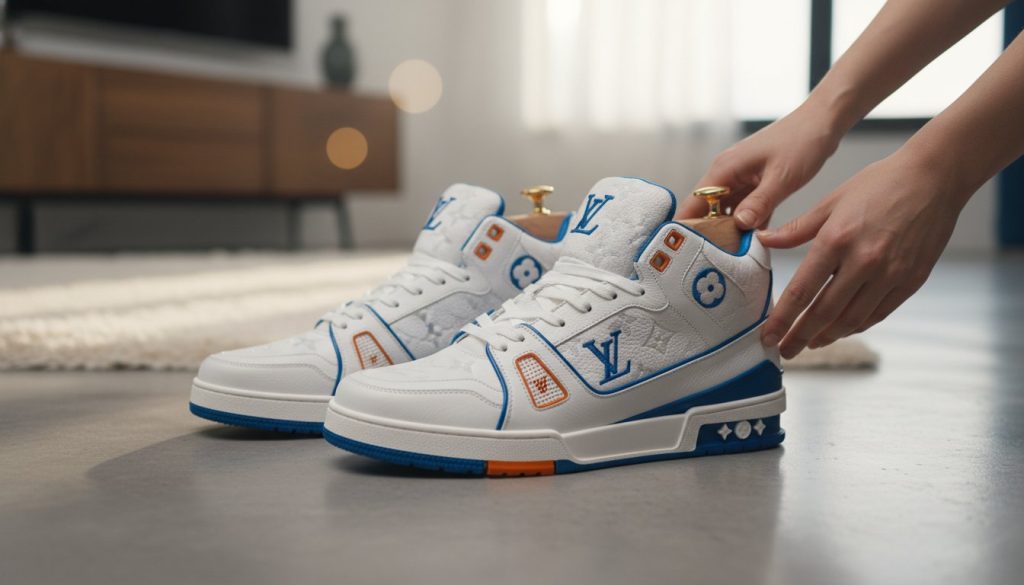
What if that brutal first-week blister isn’t a badge of honor, but a total failure of your pre-game ritual? You just copped those Travis Scott x Air Jordan 1 Lows or some Louis Vuitton Trainers, and while they look 1:1, they currently feel like concrete. Most enthusiasts think the “new shoe” pain is unavoidable, but pushing through the stiffness often leads to unnatural creasing that practically screams for a call-out. Breaking in new replica sneakers requires a strategic approach to ensure you don’t wreck the silhouette before the first real flex.
We know you want the high-end aesthetic without the secondary market tax or the physical toll of rigid materials. This guide delivers the 2026 blueprint for achieving 1:1 comfort quickly while keeping your kicks looking fresh-out-the-box. You’ll learn how to handle everything from stubborn Balenciaga Triple S units to buttery Dior B23 canvas without losing that crisp shape. Let’s get your rotation street-ready so you can stop limping and start leading the culture.
Key Takeaways
- Learn why top-tier reps use authentic materials like top-grain leather that need a strategic softening period to reach peak comfort.
- Master the 5-step blueprint for breaking in new replica sneakers using short-burst wear to avoid blisters while maintaining that fresh-out-the-box look. 👟
- Use targeted heat and shoe tree hacks to speed up the process without risking sole separation or damaging the premium silhouette.
- Identify the critical mistakes, such as aggressive manual bending, that lead to “ugly” creases and call-outs on the street.
- Discover how starting with elite UA quality construction minimizes the break-in struggle and guarantees a 1:1 fit from day one. 🔥
The Science of the Flex: Why Top-Tier Reps Need a Break-In Period
First, let’s clear the air. We aren’t talking about the Maison Margiela “Replica” line, which is just a retail name for a 70s-inspired trainer. We’re talking about the technical reality of breaking in new replica sneakers that use high-tier materials. Real 1:1 reps aren’t just for photos; they’re built for the pavement. Stiffness isn’t a defect. It’s actually a massive flex. When you unbox a fresh pair of Louis Vuitton Trainers or Jordan 1s, that rigid feel proves the factory used genuine, dense materials instead of cheap, flimsy plastics.
The “break-in” is a biological process. High-quality 1:1 replicas utilize real top-grain leather and authentic suede. These materials consist of dense collagen fibers that are naturally stiff. Your foot’s heat and movement act as a catalyst, forcing these fibers to relax and shift. Over the first 10 to 15 hours of wear, the shoe literally molds to your unique bone structure. This critical window determines the long-term comfort of your rotation. Skip the ritual, and you risk permanent, jagged creases that ruin the aesthetic.
Real Leather vs. Synthetic: Knowing Your Batch
Don’t get it twisted. Budget batches use synthetic PU or “pleather” that lacks the flexibility of organic hide. You can spot the difference with a simple “press test.” Push your thumb into the side panel. Real leather creates fine, radiating wrinkles that disappear when you let go. Synthetic materials barely move, or worse, they crack under pressure.
Low-tier reps don’t break in; they just break down. They’ll stay stiff until the glue fails or the plastic splits. This is why copping from the best high quality replica sneakers sources is non-negotiable. Quality batches mimic the retail experience, meaning they require the same respect and patience during those first few miles. Breaking in new replica sneakers is only possible when the base materials are legit.
The Anatomy of Sneaker Stiffness
Most of the “new shoe pain” lives in two spots: the heel counter and the toebox. The heel counter provides essential structural integrity. In a premium replica, this part often uses a heavy-duty fiberboard between layers of leather. It’s a masterclass in understanding shoe construction, ensuring your foot stays locked in during the flex.
The toebox is where the most visible damage happens. If the leather is too stiff, it won’t roll with your step, leading to those deep, ugly gashes across the vamp. Even the midsole needs time to settle. Whether it’s the encapsulated Zoom Air in a Dunk or the Boost pellets in a Yeezy 350 V2, the foam needs a few miles to compress and find its “sweet spot.” True comfort is earned, not given.
The 5-Step Blueprint for Breaking In Your UA Kicks
Lacing up a fresh pair and heading straight to a 10-hour shift is a rookie move. You’ll end up with a ruined silhouette and even worse blisters. Professional enthusiasts know that breaking in new replica sneakers is an art form that requires patience. If you’ve just secured a pair of Louis Vuitton Trainer Sneakers, you need to respect the craftsmanship. These aren’t cheap mall shoes; they’re high-tier builds that need a proper introduction to your feet.
Step 1 & 2: The Indoor Foundation
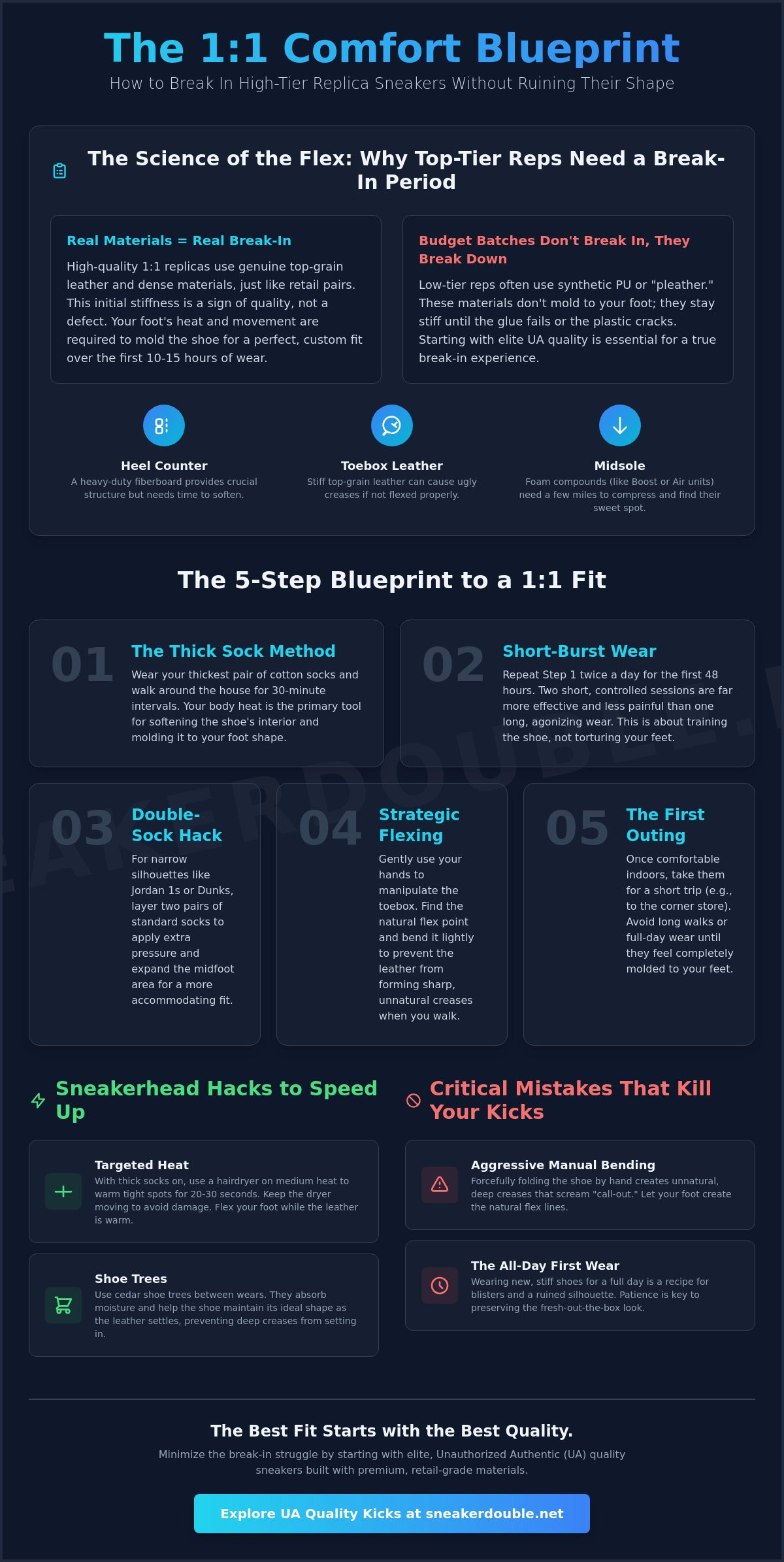
Start with the Thick Sock Method. Grab the thickest pair of cotton crew socks you own. This creates just enough internal pressure to expand the leather without over-stretching the collar. Wear them around the house for exactly 30 minutes. This is the “carpet test.” It allows your body heat to warm up the interior padding and glue layers without scuffing the outsoles on harsh pavement. If they start to pinch, take them off. You’re training the shoe, not fighting it.
Short-burst wear is the secret to a 1:1 fit. Doing this twice a day for the first 48 hours is more effective than one long, painful session. Your body heat is the most powerful tool you have. It softens the internal reinforcements in the heel and toebox, allowing the shoe to “memorize” your foot shape before you ever step outside.
Step 3 to 5: Gradual Progression
Step 3 involves the Double-Sock Hack. This is essential for narrow silhouettes like the Nike Dunk Low or Jordan 1 Retro High OG. Layer two pairs of standard socks to provide extra cushioning at the midfoot. For Step 4, try strategic flexing. Use your hands to gently manipulate the toebox. Find the natural hinge point where your toes bend and give it a few light flexes. This prevents the leather from developing those sharp, jagged creases that look unnatural on the street.
Finally, Step 5 is all about conditioning. Apply a pea-sized amount of high-quality leather balm to the primary flex points. This lubricates the fibers and speeds up the relaxation process. Just remember: keep the oils away from suede batches like the Travis Scott x Air Jordan 1 Low. You’ll know the process is complete when the “stiff” resistance disappears and the midsole starts to feel bouncy rather than rigid. Once the shoe conforms, you’re ready to flex with total confidence.
Sneakerhead Hacks: Pro Methods to Speed Up the Process
Sometimes the standard crawl isn’t fast enough. You’ve got a drop tonight and those fresh Balenciaga Triple S or Off-White x Nike Dunk Lows are still fighting back. If you want to accelerate breaking in new replica sneakers, you need to move beyond just wearing them. These pro hacks use chemistry and physics to bypass the standard 15-hour window. They require a steady hand to keep your 1:1 investment looking pristine, but the results are undeniable.
Start with the Alcohol-Water Spray. Mix 50 percent isopropyl alcohol with 50 percent water in a fine mist bottle. Lightly spray the interior lining of your Gucci Ace or Nike Air Force 1 ’07. The alcohol penetrates the leather fibers, temporarily making them more pliable. Slip the shoes on immediately with your thickest socks. As the solution evaporates, the leather sets to the shape of your foot. For tight toeboxes on a Travis Scott x Air Jordan 1 Low, try the Freezer Bag Trick. Fill a leak-proof bag with water, tuck it into the toebox, and toss the kicks in the freezer. As the water turns to ice, it expands with enough force to stretch the leather without stressing the seams. It’s a high-stakes move, but it’s effective for stubborn toe caps.
Targeted Heat Application
The hair dryer is a classic tool, but most amateurs wreck their soles with it. Focus the heat only on the “Achilles” area of Jordan 1s or the stiff heel counters of Louis Vuitton Trainers. Keep the dryer six inches away and move it constantly. Never heat one spot for more than 30 seconds. Excessive heat causes glue delamination. This leads to the dreaded sole separation that ruins a high-end batch. Once the material feels warm and soft, put the shoe on and walk until it cools completely. This “wear-while-cooling” rule locks the new, expanded shape into the leather’s memory.
Mechanical Stretching Tools
If you’re serious about your rotation, stop using DIY household items and invest in a professional two-way shoe stretcher. These tools allow you to maintain the 1:1 silhouette while specifically targeting the width. Use the included “bunion plugs” to provide relief for specific pressure points without bulging the entire side panel. This is the best way to achieve “worn-in” comfort while keeping that crisp, deadstock look. It’s about working smarter to get your Adidas Yeezy Boost 350 V2 street-ready in half the time. Breaking in new replica sneakers shouldn’t be a marathon when you have the right tools in your kit.
Common Mistakes That Kill Your Reps’ Longevity
You’ve invested in a 1:1 pair of Dior B23s or Louis Vuitton Trainers. Don’t let a rookie mistake turn that heat into a heap of trashed leather. Most people get impatient. They want that perfect fit immediately and end up taking shortcuts that compromise the structural integrity of the shoe. Breaking in new replica sneakers is a marathon, not a sprint. If you try to cheat the process, the shoe will fight back by falling apart at the seams.
Excessive heat is the number one killer. While we discussed targeted heat for the heel, overdoing it is a death sentence. Blasting the entire midfoot with a blow dryer melts the industrial-strength glue holding the upper to the sole. Once that bond is compromised, you’ll see sole separation within weeks. Similarly, don’t try to force the flex by aggressively bending the shoe in half with your hands. This creates “ugly” creases that don’t match retail wear patterns. Instead of a natural roll, you get sharp, jagged lines that scream “low quality” to anyone watching. Let your natural stride dictate where the leather breaks.
Hygiene matters too. Skipping socks during the break-in is a recipe for disaster. Fresh leather is abrasive. It will cheese-grater your heels, and those blood stains on a white interior lining are permanent. Even worse is the “no rotation” rule. Wearing the same fresh pair five days in a row doesn’t speed up the break-in; it just saturates the materials with sweat and prevents the fibers from “setting” correctly. Give your kicks 24 hours to breathe between sessions. If you’re looking for a fresh pair to add to your rotation, grab the latest 1:1 Nike Dunk Lows or Jordan 1s here to keep your style moving while your other pairs rest.
The Crease Protector Dilemma
Stop putting crease protectors in your shoes on day one. It’s a common trap. These plastic inserts change the pressure points on your toes and prevent the leather from naturally conforming to your foot shape. If you use them during the initial 10-hour break-in window, you’ll end up with a shoe that feels tight and unnatural forever. Save the protectors for after the leather has softened. This ensures you maintain the aesthetic without sacrificing the 1:1 comfort you’re chasing.
Moisture and Salt Damage
Sweat is the silent enemy of a high-end rep. The salt in your perspiration can dry out premium leather and leave “salt lines” on authentic suede batches like the Travis Scott x Air Jordan 1 Low. Use cedar shoe trees after every wear. They pull moisture out of the lining and maintain the silhouette’s crispness. If you get caught in the rain, don’t put them near a heater. Stuff them with crumpled newspaper and let them air dry slowly. Rapid drying causes the leather to shrink and crack, undoing all your hard work breaking in new replica sneakers.
Start with the Right Fit: Why Quality Construction Matters
The secret to a painless experience isn’t just about what you do after unboxing; it’s about the quality you choose on day one. If you’re fighting a losing battle with stiff, plastic-feeling kicks, no amount of thick socks or hair dryer heat will help. The process of breaking in new replica sneakers is exponentially smoother when you start with UA sneakers online shop standards. High-tier builds use premium materials that are designed to adapt, not just resist. When the construction mirrors retail specs, the break-in feels like a natural evolution rather than a physical struggle.
Our “Double Your Value” philosophy isn’t just a marketing slogan. It’s a commitment to comfort. Budget batches often cut corners with inconsistent lasting and rigid synthetic components that never truly soften. By choosing 1:1 quality, you’re getting a shoe that respects your anatomy. This higher standard of craftsmanship ensures that the midsole compresses and the upper flexes exactly where it should. You get the elite aesthetic of high-end fashion without the prohibitive secondary market prices or the agonizing “new shoe” pain phase.
Sizing Accuracy is Key
In the rep community, “True to Size” (TTS) is the ultimate metric. Sizing accuracy matters more here than in any other market. If your kicks are even half a size too small, you’re looking at permanent discomfort that no stretching method can fix. Aggressive stretching can warp the silhouette, ruining the very look you paid for. Using our precise sizing guides helps you avoid the “too small” trap from the jump. A perfect fit means the internal padding aligns with your heel and arch, making breaking in new replica sneakers a quick, three-day transition instead of a two-week nightmare.
The Sneaker Double Quality Guarantee
We don’t leave your comfort to chance. Every pair undergoes a rigorous pre-dispatch quality inspection to ensure the materials meet our “insider” expectations. We check for overly stiff soles or defective stitching that could cause irritation. For example, our Nike Air Jordan 1 Retro High OG batches utilize premium, retail-spec leather that offers the same tactile response as the original releases. This dedication to material excellence is why savvy collectors trust us to anchor their rotation.
Ready to level up your wardrobe without the retail headache? You’ve mastered the science of the flex. Now it’s time to apply it to the best kicks in the game. Browse our curated 1:1 collection and secure your next pair today. Your feet, and your fit, will thank you. 🔥
Own the Street in Total Comfort
Mastering the art of breaking in new replica sneakers is the difference between a collection that sits on a shelf and a rotation that dominates the pavement. You now have the blueprint to handle premium leathers and technical silhouettes like a pro. Remember that patience is your best tool. Stick to the gradual wear schedule, use targeted heat sparingly, and always respect the integrity of the materials. By avoiding aggressive shortcuts and prioritizing the right fit from day one, you ensure your 1:1 kicks stay crisp and comfortable for the long haul.
Ready to put these rituals to the test? We’ve got over 400 styles in stock, from the latest Travis Scott drops to iconic Louis Vuitton Trainers. Every pair undergoes a rigorous 1:1 Quality Inspection before we ship, so you know the craftsmanship is street-ready. With global shipping and fully tracked delivery, your next upgrade is closer than you think. Cop your next pair of 1:1 UA kicks at Sneaker Double 🔥. It’s time to double your wardrobe value without sacrificing the luxury experience. Stay fresh and keep flexing.
Frequently Asked Questions
How long does it typically take to break in 1:1 replica sneakers?
The process of breaking in new replica sneakers typically takes between 10 and 15 hours of active wear. This timeline allows the dense collagen fibers in top-grain leather or authentic suede to soften and mold to your foot’s unique shape. Spread this wear over three to five days using short sessions. Rushing this window with long walks leads to pain rather than a better fit. Consistency is the only way to reach peak comfort.
Can I use a hair dryer to speed up the break-in process on my reps?
You can use a hair dryer for targeted relief, but you must keep the nozzle at least six inches away from the material. Focus the heat only on the heel counter or specific tight spots for 30 seconds at a time. Never heat the entire shoe or the midsole. Excessive temperatures melt industrial glue and cause sole separation. Always wear the shoes while they cool to lock in the new, expanded shape.
Is it normal for high-quality rep leather to feel stiff at first?
Stiffness is actually a massive green flag for high-tier batches. Real top-grain leather is naturally rigid before it is broken in. Budget reps often use thin plastic that feels soft immediately but falls apart fast. When breaking in new replica sneakers from elite sources, expect that initial firm feel. It proves the factory used dense, authentic materials that will eventually provide superior long-term support and a custom fit.
Should I buy a half-size up in reps to avoid the break-in pain?
Buying a half-size up is a common mistake that leads to heel slippage and clunky movement. Stick to True to Size (TTS) for the most accurate 1:1 experience. A shoe that is too large will crease in the wrong places and never feel secure on your foot. Use our specific sizing guides to nail the fit before you buy. A proper break-in on a TTS pair results in a perfect, glove-like feel.
Will breaking in my sneakers cause them to crease immediately?
Natural creasing is unavoidable with real leather, but a proper break-in prevents those ugly, jagged lines. By using the strategic flex method, you control where the leather hinges. This ensures the creases match retail wear patterns perfectly. Avoid aggressive manual bending and let your natural stride do the work. Proper conditioning also keeps the leather supple and prevents deep, permanent gashes across the toebox during the first few miles.
What is the best way to break in the heel of a Jordan 4 rep?
The Jordan 4 heel is notoriously stiff due to the heavy structural reinforcements. Use the hair dryer method on the Achilles area for 20 seconds to soften the internal fiberboard. Immediately slip them on with double socks and walk around your living room. This expands the collar just enough to stop the digging sensation. Repeat this twice a day until the heel cup relaxes into a custom fit that doesn’t bite.
Does the ‘freezer method’ actually work for stretching replica shoes?
The freezer method is a legit hack for widening a narrow toebox without using a mechanical stretcher. Fill a leak-proof bag halfway with water and tuck it deep into the front of the shoe. As the water freezes into ice, it expands with steady, even pressure. This stretches the leather without the risk of over-extending a specific seam. It is a high-stakes move, so ensure your bags are sealed to avoid moisture damage.
How can I prevent blisters while breaking in my new UA kicks?
Preventing blisters is all about reducing friction during the initial 10-hour window. Always wear thick cotton crew socks to provide a buffer between your skin and the fresh leather. Never take a brand-new pair on an 8-hour street mission. Limit your first few sessions to 30 minutes at home. If you feel a hot spot developing, take the shoes off immediately. Patience is the ultimate blister prevention for any serious collector.